Infrastructure Control Planes in Web Retrieval and What They Mean for AI Data Quality
Controlling web retrieval infrastructure determines AI reasoning quality more than model capability.
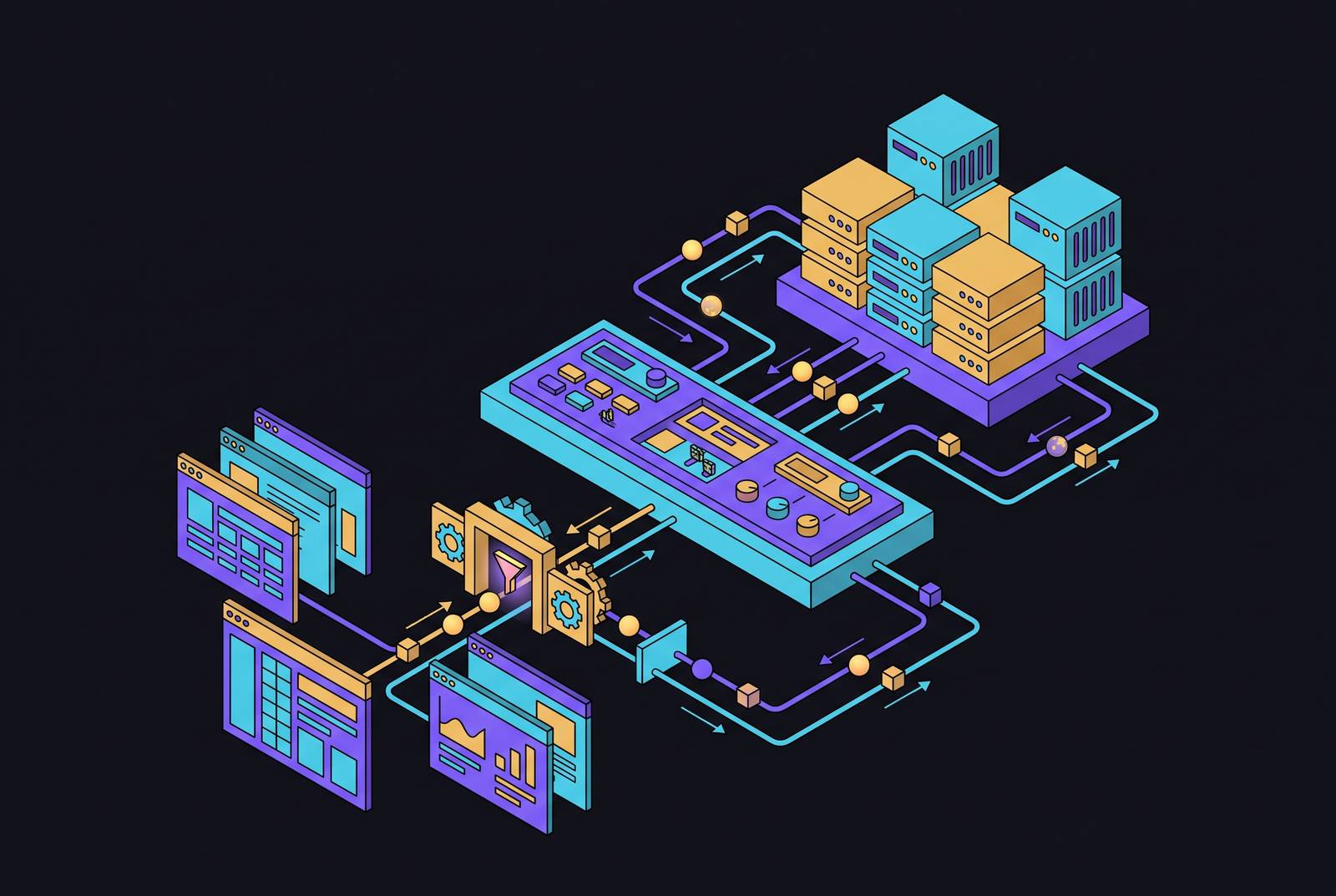
Full end-to-end pipeline ownership for web retrieval means controlling the path from crawl policy through indexing, fetching, filtering, ranking, formatting, and chunk delivery. That control determines the quality, freshness, and reliability of the external knowledge an AI system can use. A search integration alone does not establish pipeline ownership, because access to results is different from authority over how evidence is collected and prepared.
Why the web retrieval layer, not the model, now determines what an AI system knows
Model capability has outpaced the infrastructure supplying live evidence. AI agents and LLMs are now primary consumers of the web, yet their retrieval paths were built for human readers. Search results help people choose pages, while web delivery systems move those pages without knowing which passages a reasoning task needs. The mismatch begins before inference. A capable model can reason over supplied evidence, but it cannot recover a fact that the retrieval path never delivered.
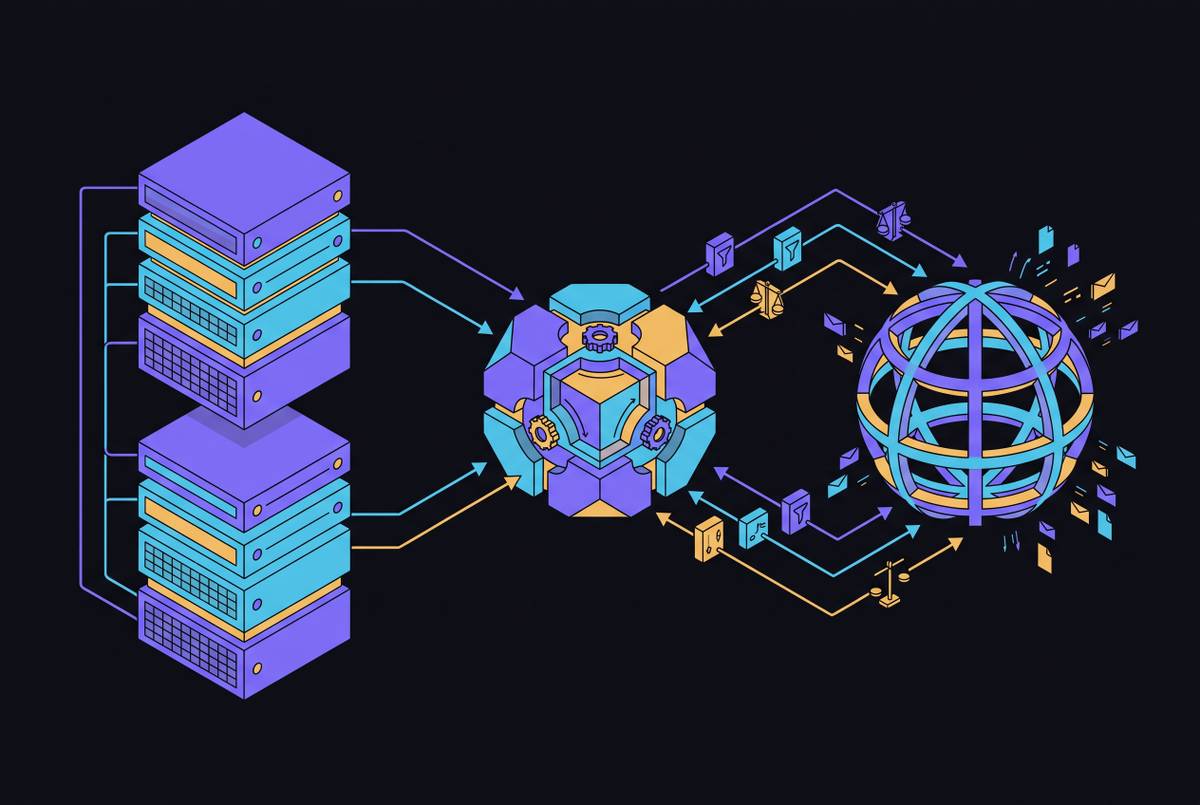
Peichun Hua and Yunming Xiao’s Semantics Delivery Network: Rethinking Web Retrieval Infrastructure for LLM Agents identifies this split at the network level. Discovery APIs expose URLs and snippets ranked for generic relevance, while content delivery networks cache URL-addressed objects without seeing the agent’s query. Neither side governs the complete evidence path. Retrieval-augmented generation, or RAG, and agentic search depend on that path because they condition generation on external context without retraining the model.
What a control plane actually is in a web retrieval stack
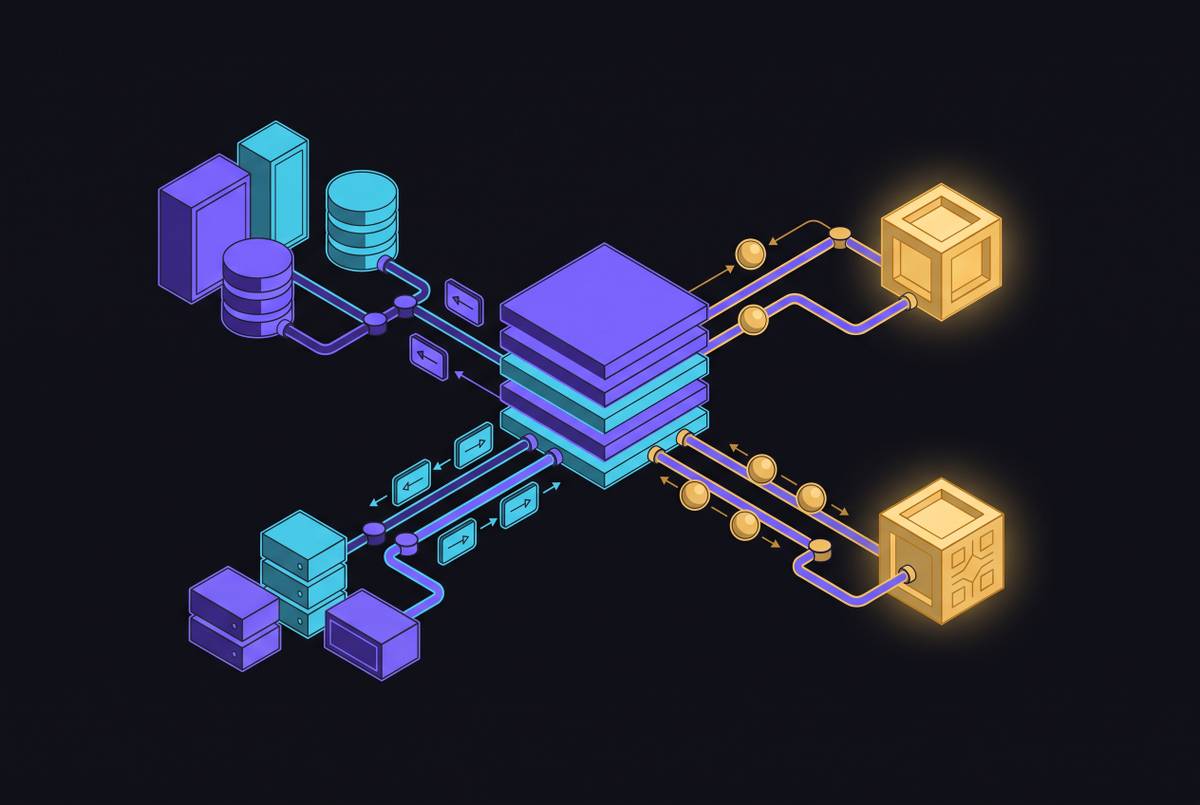
A retrieval control plane is the set of decisions a system owns over fetching, observation, filtering, ranking, and formatting. Its depth describes how far that authority extends through the stack, rather than how many capabilities appear behind an API. Fetching governs access to the page, while observation governs the representation exposed to the agent. Sessions and tool integration govern other parts of that access path. Together, these decisions define what the system can change when retrieval produces unsuitable evidence.
The observation layer makes these distinctions concrete. Raw HTML exposes page markup but wastes tokens, clean text removes noise but can lose structure, and LLM-ready Markdown preserves hierarchy while trimming irrelevant material. These are different representations of the same source. Ownership of this layer means control over that transformation. Full pipeline ownership gives the system the same control over how content is collected earlier and how it is selected and delivered later.
The split between search and delivery illustrates why ownership cannot be inferred from a single interface. A search engine may decide what to read but return only URLs, while a CDN delivers content without knowing the query. Control-plane depth is therefore a spectrum, ranging from control over the final response format to authority over the complete crawl-to-context chain.
How shallow retrieval paths degrade AI reasoning before the model ever runs
With a shallow retrieval path, the system responsible for answer quality lacks control over key decisions. URL lists and short snippets still need a separate process to fetch the target pages, execute JavaScript, remove boilerplate, and extract structured text. Each handoff introduces another dependency. Without control over fetching, an anti-bot block can return a captcha page as content, while information rendered by JavaScript stays hidden in raw HTML. The failure is not weak reasoning but missing evidence.
That distinction becomes harder to see when the tool call registers as successful. When access fails, the agent can interpret an empty page as missing data and replan around it. Uncontrolled retries then turn a retrieval defect into an operating cost. Likewise, without control over page observation, DOM mutation can lead to hallucinated selectors. These failures have different symptoms, but each follows from a decision the retrieval system cannot reliably govern.
Incomplete content is only one form of degradation. Hua and Xiao report that page-first retrieval processes two to three orders of magnitude more content than agents consume, shifting redundant work onto origins and spending tokens on noise. Missing freshness control creates a less visible problem. A cached page from a prior period can supply outdated facts with no signal to the model that they are stale. Neither prompt engineering nor a stronger model can reliably fix evidence when upstream services hide that it is missing, excessive, or old.
The four control-plane decisions that compound into either high-fidelity context or degraded retrieval
The pipeline must reach the actual page, including executing JavaScript, handling sessions, and navigating anti-bot systems, before it can extract useful evidence. A blocked page gives ranking nothing useful to work with. If the fetch returns an access wall rather than the intended content, filtering and formatting can only transform the wrong input.
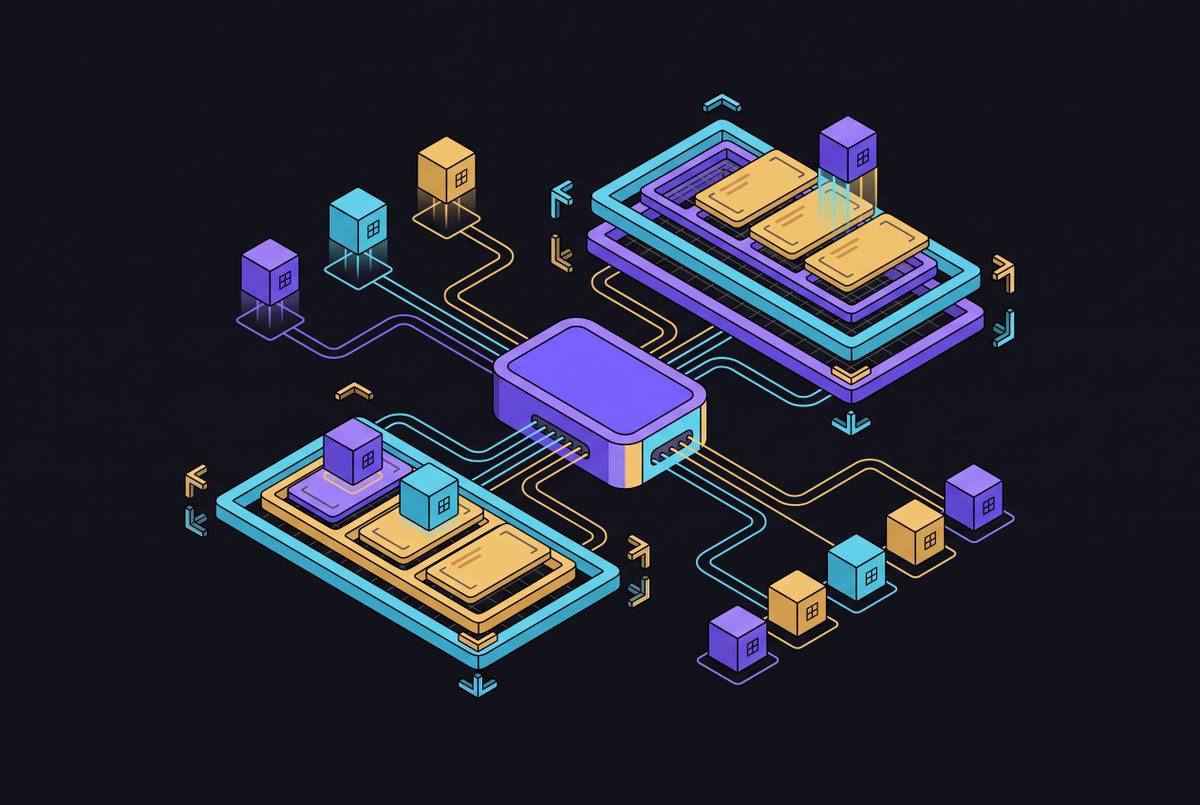
Filtering determines how much of that fetched material deserves a place in the model’s context. Navigation chrome, cookie banners, tracking scripts, and boilerplate compete with the passages needed for the task. Removing them protects scarce context space. Hua and Xiao argue that delivering only the semantic chunks an LLM needs improves answer quality per context token. Filtering thus establishes the candidate evidence available to ranking, while poor filtering forces the next stage to work through material that should never have reached it.
Ranking then selects and orders those candidates by downstream utility. Hua and Xiao distinguish utility from similarity because agents retrieve statefully across related sub-queries. A similar passage is not necessarily a useful one. Embedding-based similarity scoring, recency or priority weighting, and removal of duplicate or low-quality chunks offer different ways to shape selection. Enforcing those decisions requires authority over the relevant pipeline stages, since more context can divert the model toward the wrong signals.
Structured Markdown or JSON can preserve useful organization without requiring the model to parse raw HTML before reasoning. Representation is part of evidence quality. A pipeline that includes scraping and returns prepared content in a single call saves the model that initial parsing work. However, formatting cannot restore a passage excluded during ranking or information lost during extraction, which is why these four decisions form a causal chain rather than a menu of independent features.
Why enterprise AI deployments face these failures at a scale that makes them structural, not incidental
Pilots often succeed with clean data and limited scope, while production exposes connector, permission, and quality gaps that the pilot never exercised. Broader deployment makes those gaps recurring conditions. Retrieval becomes an organizational dependency. When different access paths return evidence that is incomplete or inconsistent, agents work with fragmented knowledge, so a successful demonstration gives the enterprise no proof that the system will be reliable in production. The underlying retrieval assumptions have changed with the deployment’s scope.
The same shift turns inefficient retrieval into a financial problem. Page-first processing spends work on content the agent will not consume, while unbounded retry loops can become the single biggest cost driver in agent runs. These costs originate below the model’s reasoning step. A program can then cost more without getting better evidence, because repeated access attempts and noisy context use resources while leaving the retrieval defect unfixed. Uncontrolled retrieval makes cost and quality deteriorate together.
Permissions add a further structural constraint. Agents that inherit a developer’s full credential surface can retrieve more information than they are authorized to surface. Successful access is not sufficient authorization. Because the extra data has already entered through retrieval, a rule for what the application layer shows cannot fix that earlier breach of the boundary. In enterprise production, the retrieval path must therefore check what the agent is allowed to use as well as whether a connector can get the requested material.
How retrieval infrastructure becomes a security perimeter, not just a quality filter
Web content that is retrieved can include instructions as well as evidence, and language models cannot reliably tell those instructions apart from what the developer wants them to do. Retrieval admits both through the same path. Poisoned pages and shared documents can thus put malicious instructions into the context used for reasoning. If those instructions enter long-term agent memory, they can appear in the agent’s context again on later runs.
The retrieval layer is the appropriate enforcement point because it controls what reaches the model in the first place. Document-level access controls and query-time policy enforcement restrict evidence to data the agent is authorized to use. A UI-level filter acts too late. Full control over the retrieval path lets a system apply authorization before delivery, while a wrapper around external services cannot on its own ensure that the system has a point where it can enforce those rules. Authorization governs a boundary that shallow integration leaves uncertain.
Dey and Viradecha’s Agentverse gap analysis places security among eight categories of missing agent infrastructure capabilities. Quality and safety share an architectural dependency. Filtering decides what makes suitable evidence, while authorization decides what is allowed into the context at all. Both need control before generation, though the rules they enforce differ.
The objection that better retrieval is necessary but not sufficient — and the production answer to it
Perfect retrieval would not eliminate model error. Faithfulness hallucination occurs when a model receives correct context and nevertheless contradicts it, making the failure distinct from missing or stale evidence. That is a genuine limit on the thesis. Retrieval infrastructure can improve the evidence supplied to a model, but it cannot guarantee that the model will use that evidence faithfully.
Indeed, faithfulness failures can be especially dangerous when retrieval succeeds, because the answer appears confident and sourced. Yet when retrieval degrades, it is harder to tell what went wrong because it is unclear whether the right evidence was ever available. Consistent evidence makes evaluation more interpretable. The production response is a cascade after retrieval, beginning with cheap heuristic checks, moving to classifier-backed checks, and using an LLM-judge fallback for borderline cases. That sequence depends on structured output against which the answer can be assessed.
Convenience presents a separate, practical objection. Direct LLM integrations that automatically perform web searches reduce the work required for a prototype, but they offer less control over search parameters, data cleansing, and cost optimization. The trade-off changes at production scale. Hua and Xiao describe task-local chunk reuse that URL caches cannot see, illustrating why query-aware, stateful infrastructure can behave differently from a convenient search connection. Control-plane investment gives evaluation and grounding a dependable basis on which to improve.
What full end-to-end pipeline ownership for web retrieval looks like in practice
Full-stack control begins with crawl policy and extends through indexing, searching, content preparation, caching, and chunk delivery. To own those stages, a provider must be able to make their decisions instead of putting its brand on an interface to decisions made elsewhere. A system that owns its crawling, indexing, and serving infrastructure can coordinate collection with retrieval and delivery, while control over filtering, ranking, and formatting determines what finally becomes model context. A single-call API may expose that architecture, but the call itself is not evidence of ownership.
Hua and Xiao propose a Semantics Delivery Network, or SemDN, that fuses the roles of search engine and CDN. Their origin-authorized design indexes, searches, and caches web content at chunk granularity, returning the passages an LLM needs and sparing it the work of downloading and post-processing pages. Presented for HotNets’26, November 16–17, 2026, in Salt Lake City, UT, the proposal makes semantic chunk retrieval a network primitive.
Anthropic’s Model Context Protocol, or MCP, addresses the complementary problem of how agents connect to external data and retrieval surfaces. Its latest version is dated July 28, 2026, and the protocol records tens of millions of monthly downloads with rapid growth by mid-2026. Standard connection can make retrieval easier to invoke while leaving collection, freshness, authorization, and content shaping under separate control. The direction of infrastructure is therefore toward both common interfaces and deeper retrieval authority, because interoperability answers how an agent connects, while the control plane determines what evidence that connection can reliably supply.