Mapping the Dependency Graph Behind Every Major AI Search Grounding API
Understanding how crawling, indexing, and extraction shape what evidence AI agents can retrieve.
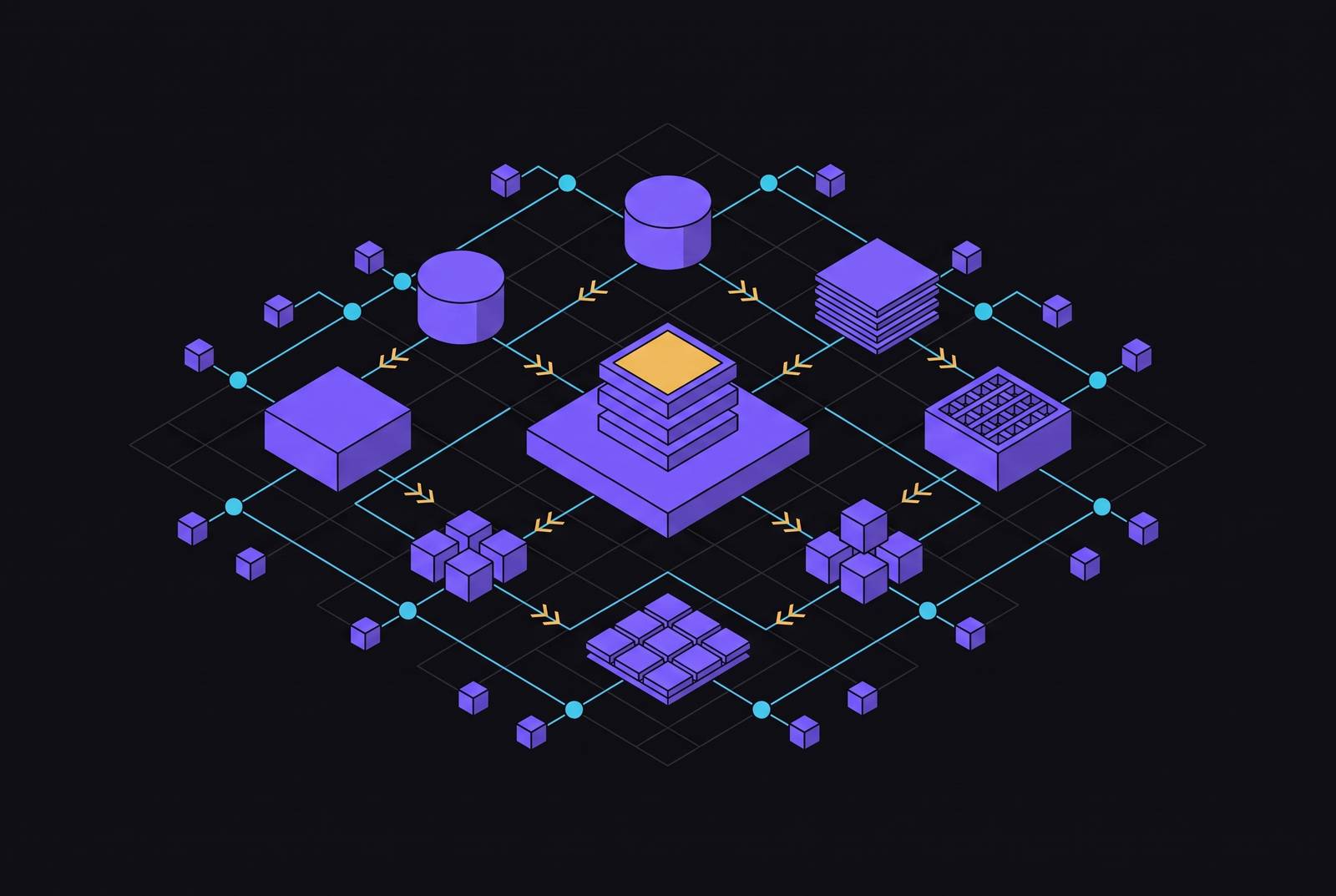
Full end-to-end pipeline ownership for web retrieval means controlling crawling, indexing, retrieval, ranking, extraction, and serving independently of another engine’s results. Microsoft’s Web IQ describes an integrated architecture built on the Bing web substrate, Harrier embeddings, and DiskANN semantic indexing. Mapping these dependencies shows where a grounding API gains or loses quality, freshness, latency, and reliability before evidence reaches the model.
Why every AI agent's answer depends on infrastructure it never sees
A support agent answering a question about a vendor advisory published this morning needs that advisory to have been discovered and indexed already. A research assistant looking for a disclosure buried in a public filing needs the relevant passage. Neither task begins with generation. Both begin with infrastructure that determines which evidence the model can receive and whether that evidence remains intelligible after retrieval.
A search call looks simple, but it hides this dependency graph. Missing evidence can mean the crawler has not reached a page, while degraded context can mean extraction discarded the useful content or returned only a shallow snippet. Each failure needs a different fix in the architecture. Treating retrieval as a black box makes them difficult to distinguish until an answer fails in production.
The four-layer dependency graph that every grounding API runs on
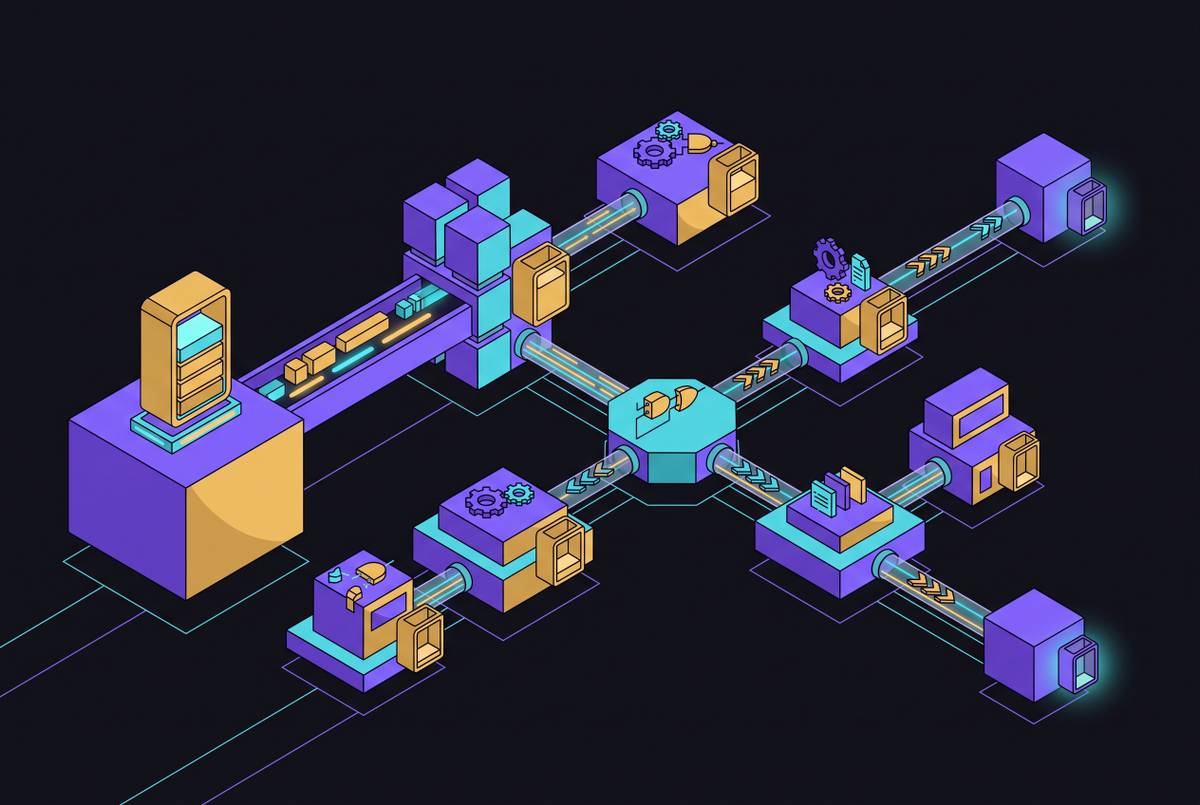
The graph has four sequential layers, with caching spanning the stack. The first is the web substrate, which discovers, crawls, and indexes public content. The second builds dense vector representations and stores them in a semantic index optimized for approximate nearest-neighbor lookup. Microsoft’s Web IQ architecture illustrates this arrangement with Harrier embeddings over the Bing substrate, stored in a DiskANN semantic index. This layer connects natural-language queries to indexed meaning.
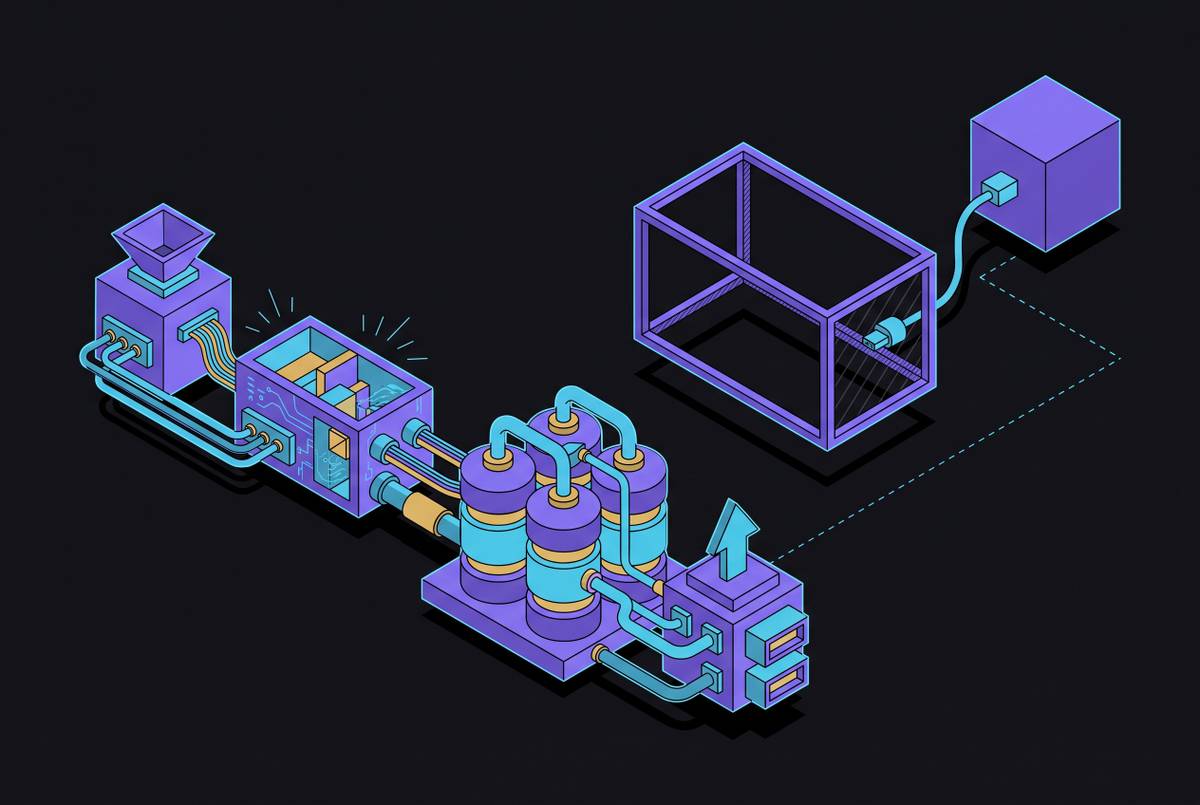
The third layer retrieves and ranks candidate passages through lexical and semantic signals. A common production pattern retrieves a broad candidate set and reranks it into a smaller evidence set. The fourth converts source material into usable context. It extracts content from HTML and documents, removes irrelevant material, and assembles evidence with citations and provenance. Caching works across these layers, reusing conversation context, equivalent query results, and page embeddings so the graph has less work to repeat.
Who controls crawling and indexing, and how does that determine freshness and coverage?
A grounding API’s retrieval depends on its underlying substrate’s discovery and indexing of pages, separating providers that own their index from traditional search engine results page APIs that return another engine’s titles, links, and snippets. Ownership changes the available controls. An index owner can tune crawl priorities and freshness windows directly, while a results intermediary inherits the upstream engine’s coverage and ranking decisions.
Microsoft describes Bing’s substrate as the product of more than two decades of investment in crawling, indexing, ranking, and understanding the open web. Its relationships with paywalled publishers include licensing agreements that cover their content. These relationships affect the available evidence pool.
Coverage also has deliberate boundaries. Web IQ follows the publisher controls it supports, including robots.txt directives that apply and other publisher signals that Microsoft recognizes, and does not reach into private back-end systems or internal customer data. Those constraints propagate into every downstream result. For the support agent, the decisive question remains whether the morning’s advisory has entered the index, because no reranker can recover evidence that is absent.
How the embedding and semantic index layer shapes what the model can find
A broad index is necessary but insufficient. The semantic layer must match the agent’s words to passages that answer its question, even when the source uses different terms. Dense vectors support this matching by meaning, while approximate nearest-neighbor structures make lookup practical across large indexes. DiskANN uses SSD-based storage to reduce memory requirements, so its architectural value includes infrastructure efficiency rather than an unconditional promise of faster lookup.
Hybrid retrieval addresses weaknesses in both lexical and semantic search. Keywords can miss paraphrases, while dense search can retrieve conceptually similar but factually unsuitable passages. Exact identifiers expose the difference. Product version numbers, named entities, and regulatory citations need lexical precision even when semantic matching helps with the rest of the question.
Index granularity further shapes the evidence returned. A passage-level index can find the right paragraph, while a document-level index leaves more work for extraction to separate it from the rest and may return nearby content that is not needed. For engineering teams, hybrid support and inspectable passage retrieval are therefore substantive evaluation criteria.
What the content extraction layer actually delivers to the model's context window
Suppose the support agent finds the correct advisory, but extraction collapses its structured table into unparsed HTML characters. The relevant distinction is between finding a source and preserving its evidence. Navigation, advertisements, cookie banners, and other boilerplate get in the way of useful content unless extraction removes them while keeping the context the model needs.
Traditional SERP responses provide titles, URLs, and character-limited snippets, leaving a separate fetch and parsing step before full content can reach the model. APIs that combine search and extraction can remove that additional round-trip. Page access still has limits. Content that appears only after JavaScript execution is invisible to a naive HTTP fetcher, while regulatory filings, clinical trials, patents, and financial data can require purpose-built parsing.
The output format determines how efficiently the model can use the recovered evidence. Compact, citable evidence objects consume fewer tokens than raw page dumps, and Web IQ explicitly targets token efficiency in evidence assembly. Provenance must survive the conversion too. Source URLs, publication dates, and confidence scores support attribution, while missing source metadata undermines auditable use in finance, healthcare, and legal deployments.
How caching architecture determines latency and cost at production scale
Repeated retrieval becomes an economic constraint when agents refine questions and search several times within one task. Even modest per-call costs compound across those iterations. Caching changes which work must happen again. Its role spans conversation continuity, reuse of equivalent searches, and deduplication of page processing rather than a single store placed in front of an endpoint.
Ayushman Bhattacharya and Nihal Gazi’s A Three-Layer Caching Architecture for Low-Latency LLM Web Search on Commodity CPU Hardware documents this approach in OreoLook. Its session context window keeps recent messages in Redis, with overflow to compressed disk archives and on-demand re-hydration. A semantic query cache matches rephrasings through cosine similarity on embedding vectors, while a URL embedding cache deduplicates computations across sessions. The paper reports an 89.3% aggregate Redis keyspace hit rate at sub-millisecond read latency. That figure is not a query-level semantic-cache hit rate or an estimate of avoided model inference.
Reuse also introduces a freshness tradeoff. Yesterday’s cached result may omit an update published this morning, even when the underlying index now contains it. Time-sensitive regulatory or news queries therefore need different cache TTL policies from stable knowledge queries. The practical evaluation is whether cache age, recency windows, and live-fetch triggers are exposed to developers or hidden inside the service. Fast cached responses are useful only when their age fits the task.
Where latency is actually lost across the dependency graph
End-to-end grounding latency accumulates across lookup, fetching, reranking, extraction, and evidence assembly. Live fetching adds an HTTP round-trip and parsing, while JavaScript-rendered pages need a browser to run them. A separate reranker adds model inference, and each query refinement can repeat the retrieval path.
Microsoft reports Web IQ’s P95 retrieval latency as 164ms and describes the architecture as one system tuned end-to-end for speed and token efficiency. Component speed is only part of the equation. The meaningful comparison is how the complete pipeline behaves under the agent’s actual search depth and content requirements.
For teams evaluating providers, the lesson is to benchmark complete tasks that include repeated searches, full-page extraction, and reranking where required. A single-query synthetic test leaves those dependencies unmeasured. Provider benchmarks using different models, prompts, and question sets do not support clean comparisons. The relevant latency budget covers the agent’s complete task, including its first API call.
The prompt injection risk that the dependency graph introduces at the extraction layer
Extraction is also where untrusted source text enters the model’s context. Retrieved content can contain both evidence intended to answer the user and instructions intended to redirect the agent. Provenance does not itself resolve that distinction. Models process retrieved text together with other instructions, and cannot reliably treat every hostile passage solely as data.
The OWASP GenAI LLM Top 10 for 2026, published August 4, 2026, describes prompt injection as intrinsic to current generative AI and states that no reliable prevention mechanism exists today. The EchoLeak vulnerability in Microsoft 365 Copilot demonstrated zero-click prompt injection that accessed and silently exfiltrated enterprise data through instructions embedded in retrieved content. CrowdStrike’s 2026 Global Threat Report documents malicious prompt injection at a significant number of organizations in 2025, including injections used to generate commands that stole credentials and cryptocurrency.
Researcher Simon Willison identifies the dangerous combination as access to private data, exposure to untrusted content, and the ability to communicate externally. The extraction layer supplies that untrusted content in web-grounded systems. Its content selection, sanitization, and provenance handling are consequently security decisions. They require treatment as a trust boundary, without assuming that cleaner formatting or attached citations can reliably prevent injected instructions from influencing behavior.
How MCP standardizes the interface layer above the dependency graph
The Model Context Protocol gives agents a standard way to discover and call tools, so they have less need for adapters built for each provider. Web IQ exposes both a REST API and an MCP endpoint through JSON-RPC 2.0. MCP-aware frameworks including LangChain, Semantic Kernel, and AutoGen can integrate grounding as a tool within the reasoning loop. This simplifies access to the graph.
It does not standardize the graph itself. Coverage, embedding quality, extraction depth, cache policy, and provenance remain provider-controlled, so a common calling convention does not make two retrieval services equivalent. Portability improves at the interface while substantive differentiation remains underneath it. MCP tool descriptions and search results also use context tokens, so teams integrating them need to limit which tools are enabled and how much content is returned.
Microsoft’s Build 2026 platform direction places MCP as the default integration layer across Foundry, Agent 365, IQ, Copilot, Teams SDK, local agent compute, and enterprise governance. That scope makes the protocol a platform strategy as well as a developer convenience. Teams still need to establish who controls the evidence pipeline behind a compatible endpoint.
What the dependency graph reveals about evaluating grounding APIs in production
Teams should establish whether a provider owns its index or depends on another engine’s crawl and ranking, then test freshness against time-sensitive queries from their own workload. Semantic evaluation should examine hybrid retrieval, document-versus-passage granularity, and whether retrieved passages are inspectable.
Extraction evaluation should test content usability by checking whether full content arrives in one request, whether the service supports JavaScript-rendered pages and the document formats teams need, and whether results keep URLs and publication dates. Tests of the cache should check which recency controls and query-specific TTL policies are available, and whether cross-tenant sharing could expose data. Latency and cost should then be measured across complete multi-search tasks using the team’s own query distribution.
The same framework clarifies build versus buy. A stack assembled from a vector database, retrieval pipeline, reranker, and evaluation infrastructure remains viable only while its integration can maintain the required substrate coverage, freshness, and latency. Pipeline ownership is therefore a control question. In enterprise and regulated deployments, that control must cover how provenance is created and kept, who owns the data, and the extraction trust boundary. A standard interface makes a provider easier to connect, but only evidence from the underlying graph establishes whether it fits production.