Hybrid Retrieval Architectures Combining Vector Search and Live Web
Live web retrieval fixes vector search's staleness and coverage limits in real time.

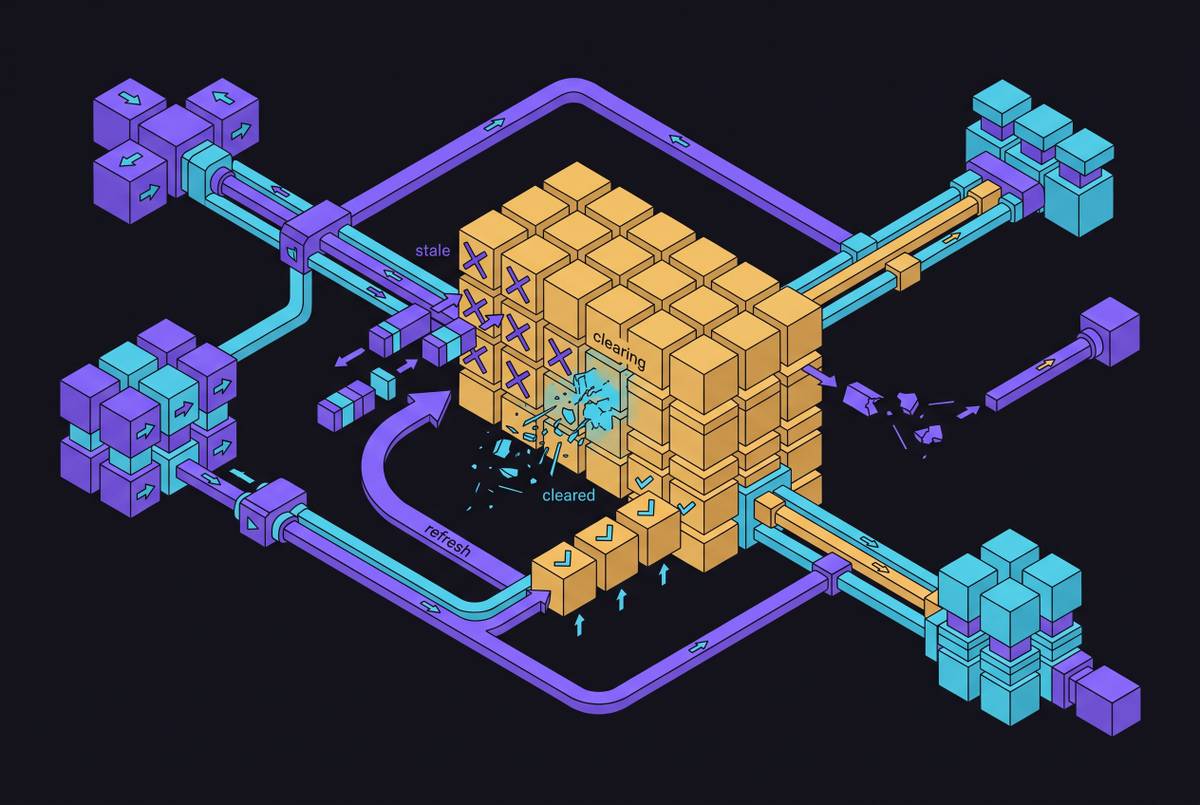
Pure vector RAG can only retrieve from documents already indexed, and any topic that moves faster than the indexing cadence produces answers that were already stale the moment they were generated. That single limitation shapes everything else about the architecture, because it is not a bug that better tuning fixes. A competitor ships a new API version, a CVE gets published, a regulation gets amended, and the vector store keeps holding what was true before those events happened. The index does not know the world has moved on, and it has no mechanism to find out until someone re-runs the ingestion pipeline.
Staleness is one failure mode. Coverage is a separate one, and it is arguably worse, because a corpus can only answer questions about content it has already ingested. Asking it about a breaking change or an event from the last hour returns nothing, leaving the LLM to either hallucinate a plausible-sounding answer or admit it doesn't know. Neither outcome is acceptable in a production system where users expect a grounded answer on demand.
Chasing this problem with infrastructure creates its own drag on a team. Re-ingestion schedules, embedding reruns, chunking pipeline monitoring: all of it adds up to engineering hours spent defending a corpus against decay rather than improving how the system reasons over what it retrieves. And even a perfectly fresh index has a retrieval weakness that has nothing to do with timing. Error codes, product IDs, API names, and library version strings often fail semantic matching even when the exact document sitting in the index is the right answer, because embedding similarity is built to catch meaning, not to catch strings.
None of this is a tuning failure that a better embedding model or a shorter re-index cycle resolves. It is a structural property of any system that answers questions from a fixed, pre-indexed corpus: the corpus is always a snapshot, and the world is never a snapshot. That structural ceiling is what makes a second retrieval path necessary, not a deficiency in any particular implementation.
What live web retrieval supplies that no indexing cadence can match
Live web retrieval removes the ingestion pipeline from the equation and turns freshness into a property of the retrieval call itself, rather than a property of an index someone has to keep rebuilding. Instead of pre-loading content and hoping it stays current, the system sends the question straight to the live web and gets back what actually exists right now, whether that's real-time pricing, a regulatory change that happened this morning, current library documentation, or a CVE disclosed today. There is no lag between the event and the system's awareness of it, because there is no index sitting between the two.
Coverage stops being bounded by what a pipeline owner anticipated in advance. Competitors nobody thought to track, events from the last hour, entire topics the corpus was never built to cover: all of it becomes reachable, because the retrieval path isn't limited to a fixed document set. Agentic architectures push this further still. SSRAG, described in arXiv:2601.12658, builds a hybrid architecture around query augmentation, agentic routing, and structured retrieval that combines vector and graph-based techniques, and the agent in that system issues dynamically adapted queries in search-reason loops rather than firing off a single retrieval call and stopping. That loop structure means the system can refine what it's asking based on what the first pass of results actually contained, which a one-shot retrieval call cannot do.
The capability comes with a real cost. Live web retrieval carries no access control, offers no guarantee of sub-100ms latency against a known corpus, and provides no compliance-controlled retrieval over a fixed document set. Those are precisely the conditions under which vector search still wins, and they are not minor caveats. A system that leans on live web retrieval alone inherits all three weaknesses at once. That is why the architecture that follows uses both paths.
How Vector and Web Retrieval Cover Each Other's Blind Spots
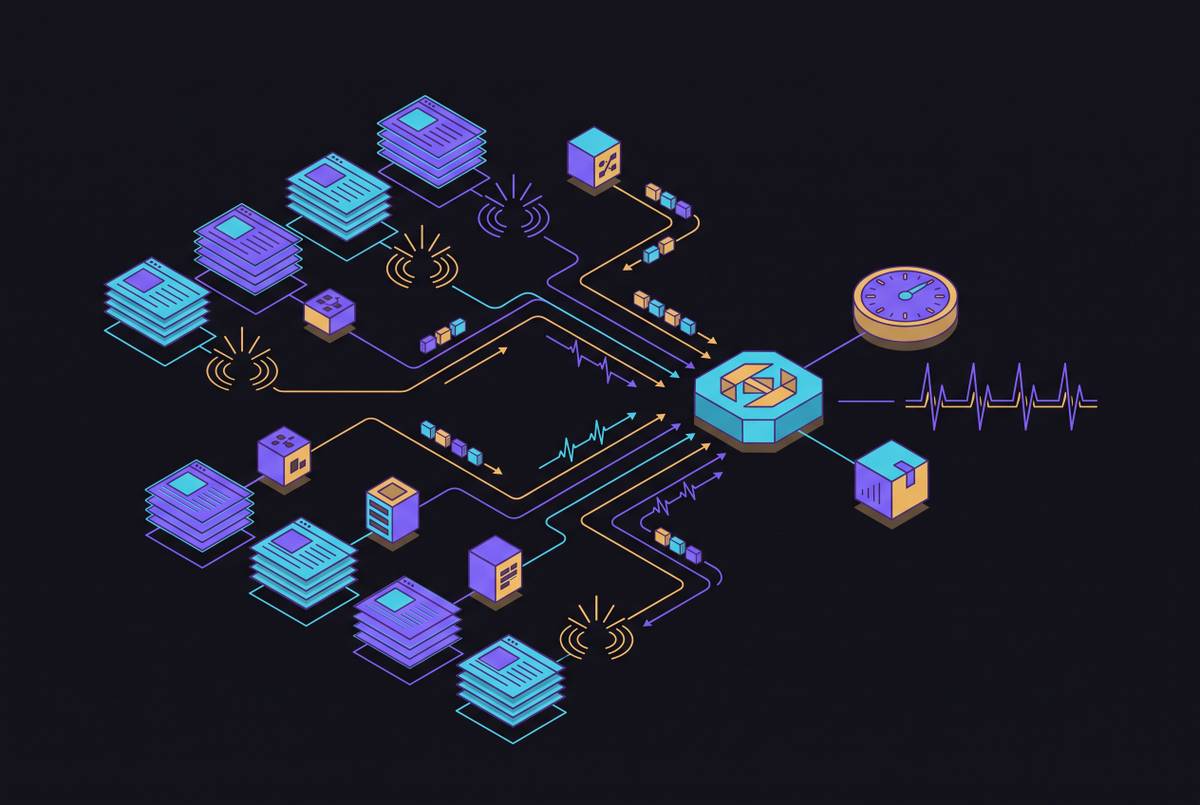
Vector search and live web retrieval are not competing options a team picks between. Each one covers the specific failure mode of the other, and that complementarity is what makes the fused architecture outperform a system built on just one of them. Vector search supplies depth and semantic precision over a governed, private corpus with a known update schedule: internal knowledge bases, compliance archives, product documentation. It is strong exactly where the content is stable and the permissions matter. Live web retrieval supplies freshness and coverage that extends past anything the index was built to hold, for queries that postdate the last ingestion run or fall entirely outside the owned corpus.
SSRAG makes this complementarity an actual architectural feature. SSRAG includes explicit factual-versus-temporal routing as a first-class component, sending queries to whichever source fits the query type, and the system's own comparison table marks that capability as absent from RAPTOR and from Learned-RAG, and only partially present in standard Agentic RAG. That comparison matters because it shows the industry converging on routing as a distinct architectural layer, not an afterthought bolted onto a single retriever.
Enterprise queries make the case for fusion concrete. A support ticket referencing a product code or a policy identifier needs exact term matching that semantic similarity alone struggles to deliver, while a question about a regulatory change needs freshness that a governed internal corpus, by definition, cannot supply on its own. Neither retriever alone covers both demands.
If live web retrieval already covers freshness and unlimited coverage, keeping a vector store running still has a reason. The answer sits in what live web retrieval cannot do. Live web results carry no access control, cannot enforce document-level permissions, and cannot guarantee sub-100ms latency against a fixed private corpus, and the vector store is the only layer in the stack that can do those things. It is not a minor operational detail, and it is the reason enterprise deployments keep both retrieval paths rather than replacing one with the other.
Inside hybrid search: how BM25, vector similarity, and Reciprocal Rank Fusion work together
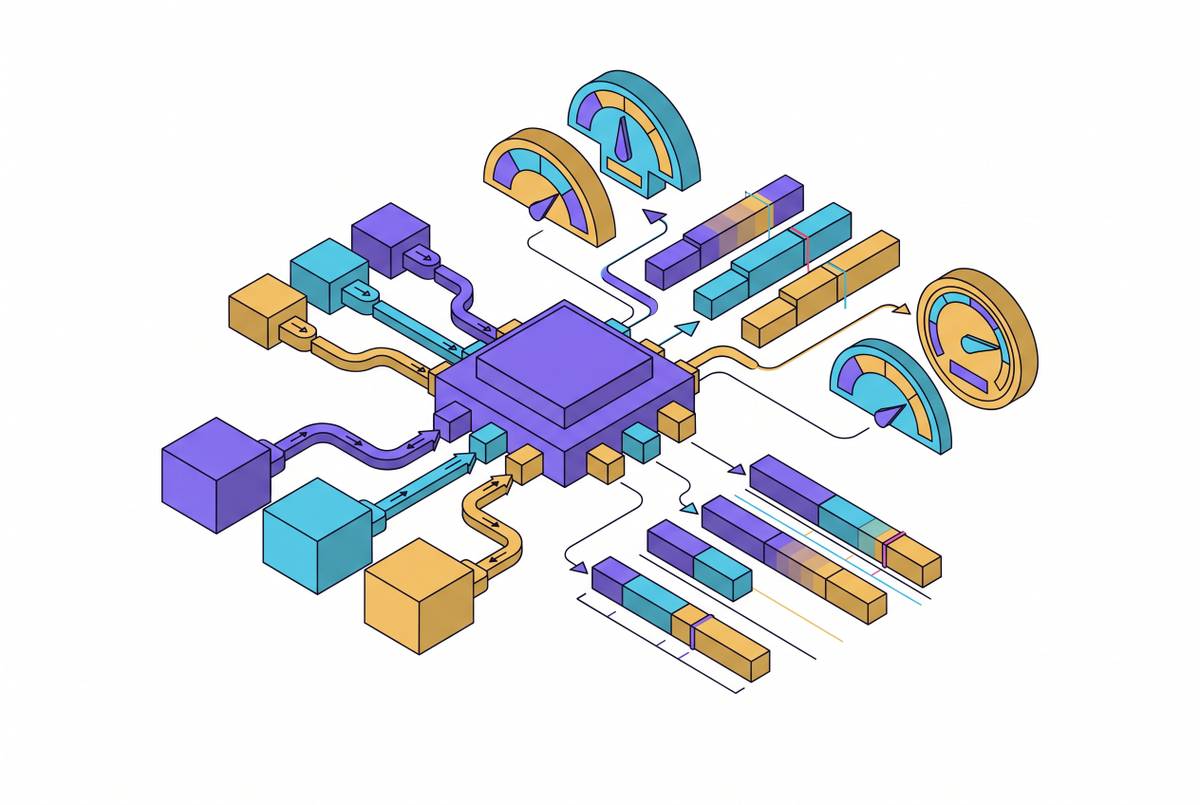
The mechanical reason hybrid retrieval works comes down to a scoring problem. BM25 and vector similarity produce scores on incompatible scales, and Reciprocal Rank Fusion sidesteps that incompatibility entirely by operating on ranks instead of scores. BM25 scores on keyword frequency, inverse document frequency, and field length normalization, the same method Elasticsearch and comparable systems rely on, and it catches exact matches that semantic models miss entirely. Vector similarity scores on embedding distance, which means it catches conceptually related documents that share no surface vocabulary at all with the query, covering exactly the ground BM25 can't reach.
Combining the two by weighting their raw scores against each other doesn't work, because the scales aren't measuring the same thing. Reciprocal Rank Fusion gets around this by merging the ranked lists directly: for each document, it sums 1/(k + rank) across both lists, where k is a smoothing constant, typically 60, and the result is an unsupervised method that needs no score normalization and no labeled training data to run. That simplicity is part of why it has become the default fusion method rather than a more elaborate learned ranker.
The output of that fusion captures both kinds of relevance in one ranked list. BM25 recovers the error codes, API names, and product identifiers that semantic search misses, and the vector component recovers the documents that share no surface vocabulary with the query but still answer it. Nothing about this is theoretical. A Ukrainian RAG system, described in arXiv:2604.22095, took second place in the UNLP 2026 Shared Task using a two-stage hybrid pipeline that paired fast bi-encoders and BM25 for candidate retrieval with a cross-encoder reranker for precision, and it did this under strict offline hardware constraints, running entirely on a single P100 GPU within a nine-hour limit. The constraint matters because it shows the approach holding up without access to large-scale compute, which is the environment most production teams actually operate in.
The multi-stage retrieval pipeline: broad recall, then cross-encoder reranking
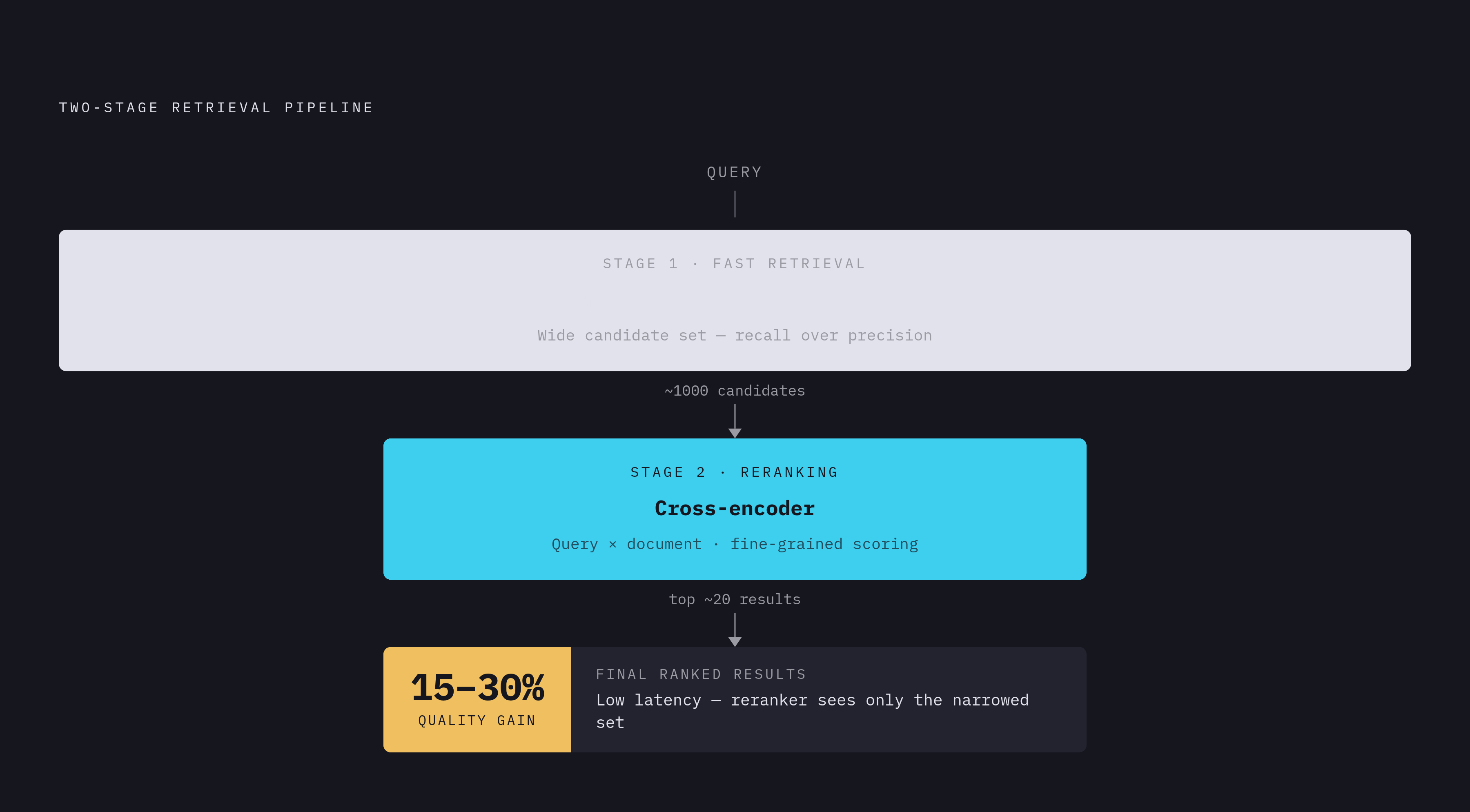
Production pipelines split retrieval into two stages because no single method can maximize recall and precision at once while staying fast enough to serve a live request. The first stage runs fast retrievers, whether bi-encoders, BM25, or the hybrid combination described above, to build a wide candidate set quickly. The goal there is recall over precision, so the net gets cast wide on purpose.
The second stage narrows that candidate set with a cross-encoder reranker, which is computationally heavier but reads the query and each document together rather than encoding them independently the way a bi-encoder does, giving it a much finer-grained signal about what's actually relevant. This two-stage shape has become the convergent pattern across recent RAG architecture work precisely because it balances latency against precision rather than sacrificing one for the other. A RAG Architecture Guide found reranking produces a 15 to 30 percent quality gain in RAG systems, with the fast first stage keeping the pipeline responsive and the reranker keeping low-quality context from ever reaching the LLM.
Chunking strategy shapes how well this pipeline performs. Webex's enterprise AI Agent team uses a hierarchical Parent–Child Chunking strategy, where retrieval searches across smaller child chunks for precise matching and then expands to the parent chunk to restore context, preserving the document's thematic connection while enabling granular retrieval. Large documents get split into fragments that lose their connection to the source document. Contextual embeddings address that by preserving document-wide intent inside each fragment, an approach described in arXiv:2604.22095. Both techniques exist to solve the same underlying tension: retrieval needs small, precise units to match against, but generation needs enough surrounding context to make sense of what it's been handed.
Routing logic: deciding at query time which retrieval path to take
Deciding whether a query should go to the vector store or out to the live web doesn't require a sophisticated classifier. A small set of interpretable signals handles most of these decisions reliably in production. The sources point to three primary signals: freshness keywords in the query itself, words like "latest," "current," "today," version strings, or date references; confidence thresholds coming out of the vector retrieval step; and topic classification that maps a query's domain to the source most likely to answer it.
Low confidence from the vector retriever functions as a routing signal in its own right. When the top-ranked results score below a set threshold, the system can fall through to live web retrieval instead of handing the LLM weak context and hoping for the best. SSRAG formalizes this as agentic query routing, a first-class architectural component that sends augmented queries either to fact databases or out to live web search depending on whether the query is factual and stable or temporal and time-sensitive, and the paper marks this explicit factual-versus-temporal split as missing from competing systems. Query augmentation happens before any of this routing decision gets made: the system refines and expands the user's raw query first, so the router is working from a well-formed signal rather than an unprocessed question.
The routing layer also runs in the other direction. When live web retrieval comes back with low-relevance results, the system can fall back to the vector store instead of passing weak web content into the context window, which makes the two retrievers mutually redundant as well as complementary. Either path can catch the other's failure, including its blind spot, which is part of what makes the architecture resilient.
Context Quality at the Fusion Layer
The ceiling on LLM answer quality is set by the quality of the context assembled from both retrieval sources, not by the model itself, and assembling that context from these heterogeneous sources requires deliberate engineering. Pass full web pages into the context window and the model receives navigation menus, boilerplate, ads, and text it never needed alongside the answer, which dilutes the signal it has to reason over and drives up token cost with no corresponding benefit.
The design that works delivers token-dense, relevance-ranked excerpts shaped for LLM consumption rather than raw page content, qualitatively different from what a SERP API returns and what a scraper extracts. Vector retrieval and live web retrieval arrive in different formats with different reliability characteristics, and unifying them into one coherent context representation is its own engineering task. SSRAG addresses this directly through a context unification component that merges vector-based and graph-based retrieval into a single reranked context before generation even starts.
Good retrieval and careful assembly still don't guarantee a faithful answer on their own. Research cited alongside these systems found that a substantial share of evaluated citations showed post-rationalization: the model cited a source correctly while having actually formed its answer independently of that source's content. That finding is a caution against over-trusting citations as proof of grounding, not an argument against retrieval itself. Citation traceability still functions as a genuine trust mechanism rather than a cosmetic feature, because tying generated output to specific evidence passages is what the RAG Stack review, arXiv:2601.05264, identifies as the basis for enterprise deployments reporting stronger user trust and fewer support escalations.
Failure Modes the Fetch Layer Must Handle
Most agent failures on the live web trace back to the fetch layer, not the agent's reasoning, and swapping one orchestration framework for another does nothing to fix any of them. Standard fetch tools and hand-built browser automation fail against real production sites in predictable ways: anti-bot systems block the request outright, JavaScript renders content the fetcher never actually sees, the DOM shifts under the fetcher mid-session, and the content that does come through sits buried under navigation chrome. None of these are edge cases. They are the default condition of the modern web.
Agents layer their own failure modes on top of that. Hallucinated selectors, query loops that never terminate, sessions that quietly drop, and token consumption nobody budgeted for all deepen the fetch-layer failures already described. Changing orchestration frameworks does not fix any of this, because the failure lives in the infrastructure underneath the agent, not in the agent's decision logic.
Live web grounding introduces a second kind of risk that pure vector retrieval simply doesn't carry: a malicious or low-quality page can get retrieved and cited as though it were authoritative, a risk described in arXiv:2601.05264, and the pipeline needs source validation in place before any of that content enters the context window. The engineering response to all of this is a purpose-built web retrieval layer, not a wrapped SERP API and not a do-it-yourself scraper, one that handles rendering, content extraction, and relevance ranking before anything reaches the fusion layer, the gap neither SERP APIs nor scraping tools were designed to fill. That's the specific gap neither search APIs nor scraping tools were built to fill, because both were designed for human users browsing pages, not for feeding a model that needs clean, dense, verified text.
Access control and permission enforcement in hybrid retrieval stacks
The most common security failure in enterprise RAG deployments has nothing to do with the retrieval algorithm and everything to do with permissions that never made it into the vector store in the first place. Authorization logic that existed in the source system, the access rules that governed who could see a given document, does not automatically travel with that document's chunks when they get embedded and indexed, and the retrieval layer ends up with no knowledge at all of who was allowed to see what. A vector store with no awareness of document-level permissions will retrieve and surface a restricted document to any user whose query happens to match it closely enough, regardless of whether that user had any right to see it in the source system.
This is why the earlier claim that vector search is the only layer capable of enforcing document-level access holds real weight rather than serving as a footnote. Live web retrieval has no permission model to enforce in the first place, because the content it returns was never gated by an organization's internal access rules to begin with. The vector store is the one component in the stack built to carry that gate forward, provided the ingestion pipeline actually preserves it. A hybrid architecture that gets the fusion layer, the routing logic, and the fetch layer right but treats permission propagation as an afterthought has built a system that answers questions accurately and exposes documents it had no business surfacing. That failure mode sits entirely outside what better retrieval or better reranking can fix, because it is a governance problem wearing a retrieval problem's clothes.
Sources
- Engineering the RAG Stack: A Comprehensive Review of the Architecture and Trust Frameworks for Retrieval-Augmented Generation Systems
- Hybrid Search Architecture for RAG Systems
- Augmenting Question Answering with A Hybrid RAG Approach
- An End-to-End Ukrainian RAG for Local Deployment. Optimized Hybrid Search and Lightweight Generation
- RAG Architecture Guide 2026 — Build Production-Ready Retrieval Systems